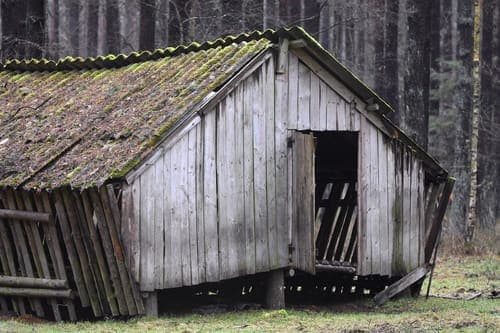
Roof sagging, door off its hinges, and a raccoon in there paying no rent.
Nobody builds a backyard shed thinking they'll be calling about shed removal fifteen years later. Then the floor goes soft, the siding cups, and you decide the mower can live in the garage instead.
We handle shed demolition and removal across the city and the closer suburbs, and the tearing down is the easy part. It's the nails. A cedar shed comes apart in under an hour and leaves two hundred rusty fasteners in your lawn, a rotted plywood floor, and whatever the mice built inside the wall. We rake and magnet-sweep the footprint, and we tarp the tomato beds and the fence line before a single panel comes off.
What changes the day is access, a slab or pier footings underneath, and how far the debris has to be carried by hand.
Keep reading for how we do it, what shed demolition services involve here, and the questions people ask first. Or give us a ring and we'll come take a look.
Tear Down Shed
When you ask us to tear down shed and pad together, the shed is usually the quick half. We take the roof first, shingles and sheathing, then the wall panels, then the frame, so nothing drops sideways into your fence or the neighbor's tomatoes.
A shed bolted down to a concrete pad comes apart differently than one sitting on 4x4 skids, and if there's a buried line feeding a light or an outlet out there, that gets killed at the panel before a saw blade touches anything.
That's the step the cheap shed demolition services skip. Hook a wall with a chain and a pickup and you take a fence post with it, or you find the old gas stub the hard way.
Size moves the number, so does access, whether power runs out there, and how much junk is still stacked inside. Shed demolition and removal down a narrow gangway is slower than an open backyard, every time, which is most of what shed removal looks like for our local demolition service.
Tear Down Shed And Haul Away
Tear down shed and haul away is one line on my sheet, not two, because pulling the building apart is the easy half. Prying a ten by twelve frame down takes a fraction of the time it takes to carry it out. The hours go into wet plywood, curled shingles, rusted shelf brackets and the paint cans nobody has touched in years.
What changes the load is size, how you get to it, and what you've been storing in there. A narrow gangway means every panel and joist goes out by hand, an armful at a time, instead of rolling to the truck.
Steel roofing and metal frames come out separately for scrap. Treated lumber, shingles and fiberboard go to the transfer station.
The half-finished version of an old shed removal is walls gone, plywood floor still sitting on its blocks, and a lawn seeded with roofing nails you find later with a bare foot. So a proper shed tear down and removal ends with the floor up and a magnet dragged over the grass.
Old Shed Removal
Old shed removal is mostly a question of what the last few decades did to the thing. Wood sheds go at the base first: the sill sits on dirt, wicks up water, and by the time the door quits latching the studs are punky and the roof is holding the walls up instead of the other way around. Metal sheds rust from the bottom panel up, and once the frame flexes those panels turn into sheet-metal razors.
We cut them down flat rather than peeling them back like a tent, because a panel under tension snaps at whoever's holding it.
What moves a metal shed removal cost, or a wood one, is size, what got stored inside, and how far everything has to be hauled down a narrow gangway. Paint cans, old gas, a dead fridge in the corner, those come out separately instead of riding in the pile.
Shed tear down and removal also means what's underneath: a slab, patio blocks, or a floor gone to mud.
Dismantling A Garden Shed
Dismantling a garden shed is mostly unscrewing, not swinging. We pull the roof first, shingles or panels, then the siding, then the framing, and the floor deck comes up last so nobody puts a boot through soft plywood on the way out. Sheds sitting on a four inch slab are almost always bolted down, and those anchors get cut flush rather than left standing up out of the concrete waiting for an ankle.
Metal sheds are their own puzzle. The screws seize into the channel, so panels come off with a cutting wheel, and every fresh edge is sharp enough to open a hand. Metal shed removal cost generally sits under a comparable wood build, since the loads are lighter and there's less to haul. Size, how far the pieces travel to the truck, a narrow gangway versus a wide gate, and how much garage overflow is stacked inside all move the number.
Sloppy shed removal leaves roofing nails and screws in the grass. We rake and magnet the footprint.
What the job involves
The job involves a lot more unscrewing than swinging. We empty it first: the mower, the half full gas can, the paint that's frozen and thawed a dozen times. That stuff doesn't ride in our truck, so set it aside for the city's household chemical drop. Then we kill any power run out from the house, strip the shingles, pull the roof sheathing, and walk the wall panels down one at a time.
Dismantling a garden shed that way keeps the debris in one pile instead of spread across your tomatoes and the neighbor's fence line.
What's underneath decides most of the day. A gravel pad gets raked flat. A concrete slab gets broken out and carried, which is real work when the only route out is a narrow gangway. Skids sunk into the dirt come up too, because a rotted floor frame left in the yard is what people call us back about a year later.
Size, access, and what's under the floor change a shed removal's price more than looks do.
What it costs
What it costs for shed removal depends less on the shed itself than on everything around it. A tidy eight by ten sitting on skids, wide gate, clear shot to the alley, that's the easy end. The same shed wedged between a garage and a chain link fence, where every board gets hand carried out one armful at a time, is a different number entirely.
Size is part of it. So is material: cedar and vinyl come apart fast, while a steel unit rusted into one solid lump fights you the whole way. A concrete floor coming out with it adds real work. So does whatever is still stored inside, and half the sheds I look at are holding paint cans, tires and a mower with old gas in the tank. That goes to a separate facility and gets charged by weight.
Give us a call with the dimensions and a photo of the path in, and we'll price your yard specifically.
Frozen ground slows anchor and slab work, so mid winter runs longer.
When shed removal is the wrong fix
Sometimes shed removal is not the job you actually need. If the frame is still square and only the floor sheeting and a sill board have gone soft, you're paying to haul off a building a carpenter could save in a morning.
If the house is coming down anyway, don't buy the work twice. Outbuildings, fences and a detached garage all ride on one residential demolition ticket, and clearing the small stuff first just means our equipment rolls onto your lot twice. Same story when a trailer is going: the sheds fold into the mobile home demolition and the whole lot gets cleared in one pass.
If what's leaning is masonry rather than lumber, that's chimney removal, which means a different rig, staging, and a roof opening that has to be closed back up. A storage shed behind a storefront usually goes out with the rest of the commercial demolition rather than standing as its own job.
Where it truly does stand alone, what swings the demolish shed cost is access, whether there's a slab under it, and how much is still stacked inside.
Why choose us for this
You have a shed out back that is one good gust from becoming your neighbor's problem, and what you want is shed removal done once, by people who take the whole thing away and leave you free to stop thinking about it.
Where these jobs go sideways is rarely the tear-down. It is the number quoted over the phone that swells the minute somebody finds a concrete pad under the floor. It is a truck that disappears to another job with half your siding still leaning on the fence. Line up a demolish shed cost against three quotes and the light one is usually light because hauling and tipping the debris never made it onto the sheet.
What we will not do is drop the walls and walk off the floor. The deck, the skids and the framing go out together, nails raked out of the grass, and the pad broken up and carted off if you want the ground back flat.
An estimate costs nothing and obligates you to nothing. Over 34 years of this, that has not changed.
Frequently asked questions
Does a backyard shed need a permit in Chicago?
Usually not for a small accessory structure, and shed removal on a standard city lot rarely turns into paperwork. We check the requirements for your address before the date goes on the calendar, and if something does need pulling, we pull it. If there's asbestos-cement siding or transite panel on the walls, that gets tested first and handled separately.
Will you tear up my grass and fence getting it out?
No. Most yards back here have a 36-inch gate, and nothing on four wheels is fitting through it, so a demolition shed in that spot comes apart by hand. Plywood goes down over the lawn, debris walks out to the alley, and we pad the fence line where long boards have to swing through.
What happens to the concrete slab underneath?
That's your call, and worth deciding before we show up. A four-inch slab breaks out with a jackhammer in about two hours and leaves as clean fill. Keep it if a new shed or a patio is going there. If it's cracked and heaved at one corner, it isn't worth saving.
Contact Chicago Demolition now
Contact us now about demolition work in Chicago, and the first thing I'll ask is how we get to the shed. Every demolition shed job turns on access: a gate wide enough for a wheelbarrow, a clear run to the truck, whether the thing is wedged against a neighbor's fence or sitting under a silver maple nobody has trimmed since Logan Square got expensive.
Tell me that on the phone and I can tell you what your day looks like before anyone shows up.
Most sheds, we're done in half a day. The part people don't think about is what's left in the dirt. Nails, staples, half a bag of hardened mortar, and a floor that turns into a rat hotel if it stays. We rake the footprint and take it with us.
Licensed, bonded and insured, certificate on request. Weekdays somebody's here, and a message gets a call back. Say the word and we'll come look at the shed removal and go from there.