Rusted chain link sagging into the gangway, and a gate that gave up latching years ago.
Nobody rings us up thrilled about fence removal, and that goes double in Chicago, where the fence is the last thing anybody looks at until the dog gets out or a buyer's inspector writes it up.
Taking fences down is a good chunk of what we do. Most of it is chain link fence removal on tight city lots where the only route out is a wheelbarrow down the gangway and into the alley, and the rest is wood, wrought iron, vinyl, and the odd panel a neighbor put up eighteen inches over the line.
What moves your number is footage, how much concrete is still clamped to the bottom of every post, and whether there's room to bring equipment in or two guys are carrying each one out by hand.
Stick with me and you'll get how the work actually goes, what the price rides on, the cases where pulling a fence isn't the fix, and the questions people ask before they book. Or just call us and we'll come put eyes on it.
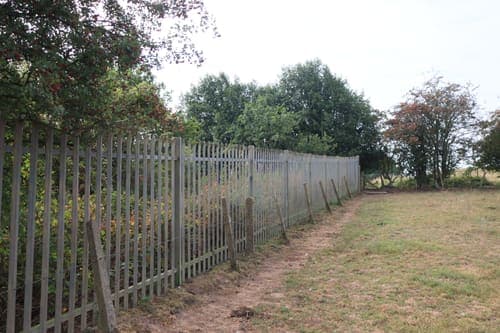
Fence Post Removal
Fence post removal is the part of a fence removal folks underestimate, because the panels come off quick and then you're looking at a row of concrete plugs in the ground. Most posts around here sit in a cone of concrete a foot across and a couple of feet deep, and wood ones have usually rotted off right at grade, so there's nothing left to grab.
Chain link fence post removal is the easier one, since the pipe still gives us something to pull against. We dig the collar, lift the footing out whole where the soil cooperates, and break it up where the clay has grabbed hold. Then the hole gets backfilled and tamped, so you're not watching a line of dips appear across the yard by August.
Post count, how much concrete is hanging off each one, and whether we can get a machine down the side yard or we're digging by hand all change the number.
Leave a footing buried and the next fence crew hits it with an auger. We take them out.
Chain Link Fence Removal
Chain link fence removal is the job we get called about most, usually because a hedge grew straight through it or somebody clipped a corner post backing out. The fabric comes off first: tie wires snipped along the top rail and line posts, tension bands loosened at the terminal post, then the mesh rolled up and strapped so nobody catches a wrist on a cut end. Rails slide out of the loop caps and get bundled.
It is all galvanized steel, so it goes on the truck for the scrap yard instead of into your can.
Where fence removal goes sideways is the wire. Leave a dozen clipped ties in the grass and you find them with a mower blade or a bare foot in June. Same story with footings cut off an inch under the sod. If a new line is going back in the same spot, fence post concrete removal belongs in the same visit, not next spring.
Run length, gate count, how overgrown it is and whether a machine fits down the alley are what move the price.
Chain Link Fence Post Removal
Chain link fence post removal is the piece people forget to ask about, and it's the piece that comes back to bite you. Line posts sit in a concrete plug a couple of feet down, and corner, end and gate posts get a fatter, deeper one because they carry all the tension in the fabric.
If somebody snips the pipe off at grade and calls it finished, you're left with buried footings that stop a new post hole cold, or that a mower blade finds for you in July.
We dig a collar around each footing, break it free with a jackhammer when the clay has gripped it, and pull pipe and concrete out together as one lump. The holes get backfilled and tamped so nobody steps in one.
Fence post concrete removal in a narrow gangway goes slower than the same work in an open back lot, and access like that, plus how deep the original installer set those footings, swings a fence removal price more than the length of the run does.
Vinyl Fence Removal
Vinyl fence removal starts easy and gets honest once you reach the concrete. The panels are just rails slotted into routed posts, so we pull the caps, back the screws out and stack the sections flat rather than cracking them across a knee. Worth doing carefully. If your run went up recently and the color is still white instead of chalk gray, intact panels are worth something to a neighbor or along the side of a garage.
In a hard freeze that changes, because cold vinyl shatters at the rail pocket no matter how gentle you are.
Then the hollow posts, each one sitting in its own concrete collar, sometimes with a steel or pressure treated insert buried inside it.
Price on a fence removal like this moves with linear feet, the number of gates, how deep whoever installed it poured those collars, and whether a wheelbarrow fits down the gangway or everything gets carried. Vinyl has no scrap value either, so hauling is by volume, and it does not crush down.
What the job involves
Fence removal starts with a call to JULIE for locates, because a gas service or a cable drop often runs right along the line somebody picked for a fence forty years ago. Panels and boards come off first and go straight into the truck. Gates come off early too, hinges and latch hardware with them, since a swinging gate on a half stripped run is how somebody gets hurt.
Posts are where the real work sits. Most around here are set in concrete, and that footing comes up with the post instead of getting snapped off at grade. Leave a concrete plug two inches under the sod and your mower finds it for you next summer.
Length of the run, the number of gates, whether a machine can reach the back yard or every panel gets hand carried out through a gangway, and how brittle the material has gone: all of that changes the quote. Rotted cedar and cracked vinyl fence removal both let go where you don't want them to. Most of these get done in half a day.
What it costs
What fence removal costs on your property depends less on how long the run is and more on what's holding it up. A cedar privacy fence with posts tamped into dirt comes out quick. Wrought iron set in concrete footings the size of five gallon buckets means digging and breaking, and it loads a dumpster with weight rather than volume, which is how disposal gets billed. Then there's getting to the thing.
A fence sitting down a three foot gangway means every panel comes out by hand and up the walk, because no machine is fitting through there. Vines grown through the mesh, a section already flattened into the neighbor's yard, a gate somebody bolted to the garage, all of that adds hours.
Call us with the rough footage, what the fence is made of, and whether a truck can get near the back gate, and we'll talk through your fence removal cost on the spot.
Frozen ground turns footing holes into a chisel job, so a fence that lifts out easy in October will fight you in February.
When fence removal is the wrong fix
Sometimes fence removal is the wrong call, so let me say it plainly before we load the trailer. If the fence is standing straight and the real trouble is the garage leaning over it, pulling pickets buys you nothing. You want garage demolition first, because we take that fence line apart anyway to get a machine down the alley. Same with a rotted backyard shed bolted to two posts.
That's shed removal, and the panel comes out with it on the same day.
Gutting a house is the other one. If you're taking rooms back to the studs, the fence stays until last. Floor removal and appliance removal go on while that fence is still keeping the alley out of your dumpster. On a lot headed for mobile home demolition, the perimeter chain link comes down with the structure, not a week ahead of it.
Sequence it that way and the fence removal cost rides along on a bigger job instead of paying for its own truck.
Why choose us for this
You've got a fence that's finished, and what you want isn't craftsmanship. It's to hire once, stay out of the way, and not think about that line again for years. That's the whole job with fence removal.
The lowest number on the phone usually leaves things off the sheet. Footings snapped at grade and left in the dirt, so the next hole you dig hits a mushroom of concrete. Debris stacked by the alley until a dumpster arrives on your dime. Chain link ends and old nails in the grass where the dog runs.
Nobody puts a machine on those posts until we've located the gas line and the sprinkler heads running under them. After 34 years of fence demolition in this city, the surprise under a fence line is rarely the fence.
Length of the run, how deep the posts were set, what shape the yard is in, and whether the only way in is a gate three feet wide are what change your number. An estimate is free, and you don't sign a thing to get one.
Frequently asked questions
Do I need a permit for fence removal?
Usually not, if it's a straight fence removal on your own property. Where it ties into a garage wall, sits on a shared line, or backs an easement, we check with the city first and give your neighbor a heads up before any saw comes out.
Will you tear up my yard getting it out?
Some scarring where the footings come out is unavoidable. We call in a JULIE locate before digging, hand dig anywhere near gas or cable runs instead of trusting a machine, and tamp dirt back into the holes level enough that you can seed over them the same week.
What happens to the old fence once it's down?
It leaves on our truck the same day. Chain link, rail and posts go to a scrap yard, treated wood and vinyl to a transfer station. What moves the number on fence demolition is the run length, how deep the posts were set, and whether we can get a truck down the alley or it all walks out by hand.
Contact Chicago Demolition now
Fence removal is one of those jobs that goes sideways when nobody looks at the property first, so that's where we start: how wide the gangway is, whether the alley gate opens far enough for a truck and trailer, and which posts are set in concrete versus tamped straight into dirt. A hundred feet across an open back yard is easier work than thirty feet behind a locked gate, and that difference shows up in the estimate.
We get the utility locates called in before a single post comes out. A chain link run along a rear lot line often sits inches off a gas service or a cable drop, and clipping one turns a quiet morning into an afternoon spent waiting on somebody else's crew.
The debris on this work is mostly hardware, staples, clips, cracked top rail and lumps of old footing, and it all goes in the truck rather than into your lawn for a mower to find later.
Give us a ring and we'll walk the fence line with you.