Brick two-flat with a sagging porch, a flooded basement, and a buyer waiting on a clear lot.
Residential demolition in this city is really a parking problem with a house attached. Narrow lots, alleys sized for a horse cart, and the neighbor's garage sitting eighteen inches off your property line. We take down frame houses, brick bungalows and two-flats: sewer and water capped at the main, the structure wet down through the whole knockdown so the dust doesn't settle on somebody's tomatoes, and every load hauled out.
A good share of our work is home tear down and rebuild, where the old foundation has to come out clean so your builder isn't fighting buried footings.
People ask what it costs to demolish a small house. Square footage, alley access, basement depth and asbestos do most of the deciding.
The permit, the asbestos rules and how the work actually runs are further down. Call me and I will come walk the lot with you.
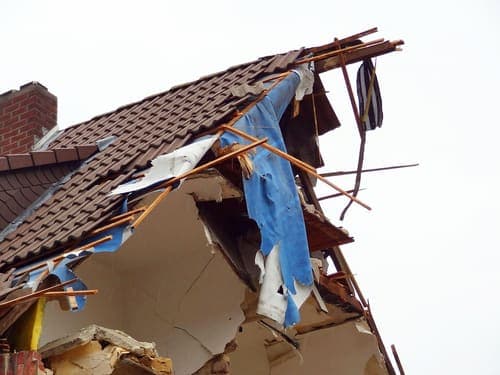
House Demolishing
House demolishing on a tight city lot is mostly setup, and only the last part is the machine. We cap the gas at the main, get the power pulled, shut the water off at the B-box, bait for rodents so they don't just relocate to the neighbor's garage, and have the house demolition permit in hand before a single wall comes down.
Then the soft strip, water on the pile all day so the dust stays on your side of the lot line, and the structure goes down in sections rather than all at once.
Foundation walls and footings come out too, right down past the basement floor, backfilled with clean fill and graded flat. Leave them buried and you've bought yourself a soft spot under whatever gets built next.
What changes the number to demo a house is size, basement depth, brick or frame, and whether we can back a truck down the alley or have to thread everything past six feet of side yard. Residential demolition on a corner lot is a far easier day than a Bungalow Belt lot with houses close on both sides.
Building Teardown
A building teardown is full residential demolition: roof, walls, porch, foundation, basement walls, and the hole filled and graded flat. We work top down with an excavator and a thumb rather than shoving the place over, because a frame bungalow on a twenty five foot lot sits close enough to the neighbor's siding that pushing is how you end up buying somebody else a new gutter run.
Gas capped, electric pulled, water killed at the buffalo box, and if the survey comes back dirty it becomes an asbestos house demolition with abatement finished first.
What moves the money when you demo a house is footprint, how deep the basement goes, and whether the alley takes a truck or everything gets hauled out front past the parkway trees.
And the fill matters. Broken brick dumped back in the hole settles, and whatever slab goes over it cracks.
Home Tear Down And Rebuild
A home tear down and rebuild is the most common residential demolition call I get in the bungalow belt, and it's really two jobs handed off cleanly. My part is leaving your builder a hole they can actually build in. That means the old foundation comes out, not just the walls above it, because a new plan almost never sits on the same footprint a 1920s frame house did.
Clean fill goes back in lifts and gets tamped so your new slab isn't settling by next summer.
What moves the money here is size, whether there's a full basement under you, brick versus frame, and whether my machine can work off the alley or has to thread between two houses on a 25-foot lot.
The mistake I see: chunks of broken foundation buried in the hole. Your builder digs them out again on your dime.
House Demolition Permit
A house demolition permit in Chicago comes out of the Department of Buildings, and pulling it is most of the waiting on any residential demolition. We handle that part. It means the wrecking application, proof that ComEd and Peoples Gas have cut and capped their service, a licensed plumber's sewer disconnect at the main, and the water shutoff signed off downtown.
Skip one and an inspector red-tags the site with the excavator already parked on your parkway, which is a very expensive way to spend a morning.
A partial house demolition carries its own paperwork, because you're altering a structure that's still standing and still occupied rather than clearing the lot.
Tight lots, alley access, shared walls and any protected tree out front all get answered on the application, not on demo day.
Asbestos House Demolition
Asbestos house demolition starts with a survey, not a machine. Somebody licensed walks the house and samples the usual suspects: transite siding, pipe wrap in the basement, nine by nine floor tile and the black mastic under it, vermiculite in the attic, tape on the old octopus furnace. Whatever comes back positive gets abated by a licensed crew, wet down, bagged, manifested and hauled to a landfill that will actually accept it, with notification filed first.
Skip that step and fibers end up in the gangway next door, the job gets shut down, and nobody will take your debris.
What moves money on this one is how much material there is and where it's buried. Siding is straightforward. Mastic under three layers of flooring isn't. Tight lots and overhead wires stretch any residential demolition, and that's the part of a building teardown people underestimate when they price out the cost to demolish and remove a house.
House Demolition After Fire
House demolition after fire is its own job, because what's left isn't a building anymore. It's a wet, sooty stack with a roof balanced on top. The hoses that saved the block put thousands of gallons into that plaster and framing, so fire debris weighs far more than a dry teardown, and weight is one of the things that changes what it takes to demolish and haul a house away.
Size, whether we can get a machine down the alley, how much is still standing, how much of the basement took water, and whether your insurance company wants contents documented before a dumpster shows up all shift the number too.
Where residential demolition on a fire loss goes wrong is burial. Some crews push the charred material into the hole and backfill over it. Then your rebuild sits on burnt lath, melted glass and ash. We pull it out.
Partial House Demolition
Partial house demolition is the surgical version of this work: a rear addition off a frame two-flat, a second story that never got framed right, an attached garage pulling away from the house. The half that stays has to keep standing, so we shore the framing before the machine touches anything, cut the roofline back clean, and cap only the utilities feeding the section coming out. Then the open wall gets sheathed and wrapped the same day.
A lake wind and an overnight rain into exposed joists will cost you more than the demo did.
Folks call asking the price to tear down house and rebuild, then find out half of it can stay. What moves the number: load-bearing or not, masonry or frame, and how much of the residential demolition goes by hand because a gangway won't fit an excavator.
What the job involves
Residential demolition on a city lot is mostly sequencing. Utilities get killed and capped, the sewer gets plugged, then the machine works from the back of the house toward the street so the debris falls where we can load it instead of into your neighbor's gangway. We keep water on it the whole time, because dry dust on a breezy afternoon lands on three cars and a porch swing.
Foundation and basement walls come out too, not just the part you can see. The hole gets backfilled with clean fill and rough graded. Bury broken concrete down there and whoever pours next inherits a settling problem.
What swings the price to tear down house and haul the debris off is access, how deep the basement runs, and whether the garage and slab go with it. Planning to demolish a house and rebuild? Tell me that early, because it changes how we leave the lot.
What it costs
What it costs on a residential demolition comes down to a handful of things I can size up in ten minutes standing on your lot: the square footage of the house, whether there's a full basement under it or just a slab, how tight the neighboring two-flat sits to your lot line, and whether the alley will let a machine and a roll-off in without a fight.
Asbestos moves the number further than anything else, since old siding, pipe wrap and floor tile all get tested and abated before the excavator so much as touches the roofline. Then there's the hole to fill and the plaster, brick and lath to haul to the scale. Call me with an address and I'll price your teardown. Winter work runs longer, too, because frozen ground fights the bucket.
When residential demolition is the wrong fix
Sometimes residential demolition is the wrong call, and I'd sooner say that on the phone than after the excavator's already on the trailer. If the shell is sound and it's the guts you hate, the lath, the plaster, the kitchen somebody remodeled badly in 1978, that's interior demolition, and you keep your roof, your walls and a much smaller permit.
If the eyesore is out back, a cracked gunite shell or a fiberglass tub nobody's filled in years, that's pool removal or hot tub removal, not the house. Heaved walk, dead garage slab, old stoop? Concrete removal handles it. A three-flat with a storefront underneath goes down the commercial demolition route instead. Buy the full teardown when you didn't need it and you've paid good money to lose a structure you were going to keep.
Why choose us for this
You've got a house you want gone, and what you really want is to hire one outfit for the residential demolition and then stop thinking about it. Reasonable.
The quote that comes in low usually leaves items off the sheet: the utility disconnects, capping the sewer, hauling the foundation out rather than burying it in the hole, and putting the parkway and walk back the way the city expects to find them. Those turn into change orders in week two, and suddenly you're the one managing the job.
What changes the cost to knock down a house is lot width, whether a machine fits down the alley, how deep the basement runs and what's under the garage slab. So I walk it before I put a number on it, and the walk costs you nothing.
I've been tearing houses down on lots like yours the best part of 34 years.
Frequently asked questions
How long does a residential demolition take?
The machine work is done in half a day on a typical frame house. The whole job, from utility disconnects through backfill, usually runs a couple of weeks, and the gas and electric shutoffs set that calendar far more than the excavator does.
What changes the cost to knock down a house?
Square footage first, then whether you're sitting on a basement or a slab, how much room there is along the lot line for a machine and a container, and what the asbestos survey turns up. Old plaster and layers of flooring add real tonnage to haul.
Will it damage my garage or the place next door?
Not if it's planned properly. On a 25 foot lot we pull the structure inward, hand cut where anything touches a shared wall, and run water on the pile. Neighbors notice the dust before the noise.
Contact Chicago Demolition now
Contact us about demolition in Chicago now if you want it on the books before the ground goes hard and the schedule tightens up. Send me the address, the footprint of the house, and what you want standing on that lot when we're finished.
People ask about the cost to demolish a small house as though a small house is one thing. A frame cottage on a wide lot and a brick two-flat pressed up against the neighbor's gangway are not the same job. Room for the machine, how far down the old foundation walls run, and where the gas and water have to be capped all shape how we plan residential demolition on your block.
Buried foundation walls left in the hole are the mistake I see most, and you feel it later in whatever gets built on top.
Somebody's here through the week, nine to five. Leave a message outside that and you'll get a call back.