Sagging roof, a side wall bowing toward the fence, a door that stopped closing years ago.
Most garage demolition in Chicago happens off a sixteen-foot alley, where the machine, the dumpster and somebody's parked Malibu all want the same strip of gravel. So we size the equipment to the alley instead of hoping for the best, and where a machine cannot swing clear of a fence or a gangway, that wall comes down by hand.
We handle the tear-down permit, get the gas and electric cut and capped, and haul the framing, the shingles and the slab out together when you want the slab gone too. The one thing we refuse to do is leave a ragged skirt of concrete along your fence line and call it finished grade.
Detached garage demolition is most of our week, and old asbestos siding, a deep footing or a blocked alley move the number more than square footage ever will.
Below is how demo day runs, the permit, and the stuff people want cleared up first. Call and we will come look at yours.
Garage Demolition Permit
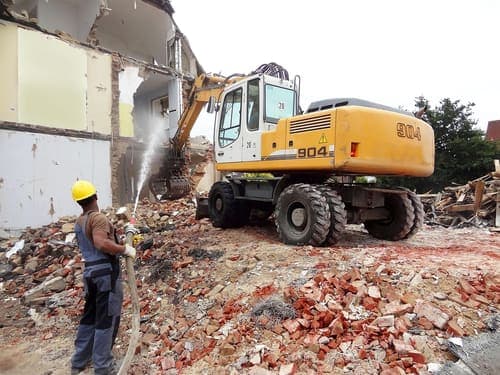
Yes, you need a garage demolition permit, and pulling it is our job, not yours. The city issues the wrecking permit against our license and insurance, and it wants a current plat of survey showing what's coming down and where the lot lines actually sit. Gas and electric service to the structure has to be cut and capped by the utility first.
If there's a floor drain in that slab, a licensed plumber caps the sewer and that paperwork goes in the file too. Rodent abatement gets done before anything comes apart, because the alley population doesn't relocate on its own, and your neighbors will work out whose garage started it.
Chicago demolition permits also carry a dust and water condition, so the walls get wet down as they come apart rather than after somebody complains.
What I won't do is start swinging on a verbal promise that the permit is "in process." That's how a job ends up with a stop-work notice stapled to the fence and a fine riding along behind it.
Garage Demolition And Removal
Garage demolition and removal means the whole structure leaves your lot: roof, walls, the slab if you want it gone, and every brick, board and shingle hauled off so you are looking at dirt instead of a pile.
Most of the garages we take down sit at the back of the lot off a city alley, which is easy when the alley is wide and slow when there is a pole, a fence line and a neighbor's garage a few feet from the doors.
A stick frame garage with asphalt shingles comes apart quickly. Brick walls, a four inch slab with wire in it, or a loft full of forty years of storage add weight, and weight is what fills trucks. Size, alley access, whether the concrete stays, and what the siding turns out to be up close all shift the effort.
Done sloppily, the buried footing gets left in the ground and your new slab or fence posts land on rubble. The gas and electric feeds get killed and capped first, and the alley gets swept for nails.
Detached Garage Demolition
Most detached garage demolition here happens off the alley, which is good news: the truck backs in, the structure folds away from the overhead lines, and your fence and yard stay out of the way. Before we touch it, I kill the electrical feed coming from the house and have the gas capped if somebody ever ran a heater out there. Then the roof comes off, the walls go in, and the debris loads out.
The slab is the part people forget. Garage demolition and removal gets quoted all sorts of ways, and some of those numbers leave four inches of concrete and a perimeter footing sitting right where you wanted grass or a new pad. If you want it gone, say so, and we take the slab, the footings and the apron lip at the alley with it.
Two things change the work: old siding board that tests positive for asbestos, and a wall shared with the neighbor, which turns a machine job into careful hand work.
Carport Demolition
Carport demolition is a quicker job than a full garage demolition, because you are dealing with posts, a roof deck and a slab instead of four walls and a service line. Most of the ones we take down here are aluminum, or a wood frame lag bolted straight into the house. That bolt line is where the care goes.
Yank a ledger off siding with no plan and you leave an open seam feeding water behind the wall, so we cut the fasteners back, drop the roof in sections, and close up the wall before the truck rolls.
The slab is the other decision. Plenty of people keep it as a parking pad, in which case we saw the post pockets clean and fill them rather than leaving ankle traps.
A tight gangway with no alley for the dumpster slows the whole thing down and shows in the quote, as does old corrugated cement paneling that needs testing before we touch it.
What the job involves
Garage demolition starts before a machine ever touches the building. We shut the power off at the panel, cap any gas line running out to a heater, and check whether the siding is that old cement asbestos board, because that changes who handles it and how it leaves your property. Then the overhead door comes off and the contents come out. Paint cans and tires can't ride out on the truck with clean wood and concrete.
The structure comes down inward, toward the middle, not out toward the neighbor's fence. Roof, then walls, then the slab and the apron if you want those gone too. Concrete gets kept separate from framing and hauled separate, and the dirt gets raked flat behind us.
Carport demolition is lighter, mostly posts and a roof deck, but the footings underneath still have to come out or your next slab sits on humps.
What moves your number: alley width, how close that fence sits, whether the slab stays, and how much fill goes back in.
What it costs
What it costs depends on what's in the way, what's in the walls, and how much I'm hauling out of the building before the machine ever touches the frame. Garage demo cost climbs when the slab comes out with it, since breaking and loading four to six inches of concrete with old wire mesh running through it is its own piece of work.
A building stacked to the rafters with paint cans, tires and a snowblower that quit years ago adds weight to the load, and weight is what the landfill charges on.
Old siding and roof material sometimes need testing first, and abatement changes the figure.
Then there's getting out: a narrow alley, a service line clipping the roofline, a gate the truck won't clear. Frozen ground in deep winter makes the fill and final grade slower than it would be in October.
Give us a call with the footprint and the alley width and we'll price your garage demolition on the actual conditions, not a guess off a photo.
When garage demolition is the wrong fix
Sometimes garage demolition is not the job you need. If the only thing wrong is a rotting eight by ten wood box sitting on skids out back, what you want is shed removal, since there is no slab to break out and no foundation wall to chase down. Same logic if the real trouble is crumbling brick above the roofline on the house.
That is chimney removal, and flattening a perfectly sound garage will not stop water tracking into your bedroom ceiling.
And if the house itself is coming down, do not pay for two setups. Getting one crew mobilized for residential demolition with the garage folded into the same scope keeps truck trips and paperwork down, where a separate garage demo cost stacked on afterward mostly buys you a second mobilization.
Bigger structures run the other direction. Utilities still live, shared party walls, an alley trucks cannot turn in: that is commercial demolition, a different permit path, and not something to quote off a garage page.
Why choose us for this
You want the garage gone, and you want to hire one person for it and then stop thinking about it. Most calls I get about garage demolition start the same way: somebody quoted a number over the phone, then the invoice grew once the crew hit a slab a few inches thicker than they guessed, or found asbestos shingles under the siding.
So I walk the property first. I look at the slab, the footings, how far we are carrying the pile out, and whether a container can sit in the alley or has to go on the street. Those are the things that move the cost of tearing down a garage, and you should hear them before the work starts, not after.
Am I the cheapest number you will see? No. I take the slab and the footings out too, and the low quote often leaves a broken concrete edge and a soft crater in your yard.
Looking at it costs you nothing, and nothing gets signed while I am standing there.
Frequently asked questions
How much does it cost to tear down a garage?
The cost of tearing down a garage follows three things: how we reach it, what it's built from, and what has to leave the property. A one-car frame garage on a wide alley is the easy version. Asbestos-cement siding that needs testing and separate handling, a slab poured eight inches thick instead of four, or a narrow gangway where every load gets wheeled out by hand all push it up.
Will garage demolition damage my house, my fence or the neighbor's?
No, not when it's set up properly. We kill gas and electric at the meter before a machine touches anything, pull the walls and roof inward rather than out, and lay plywood over the gangway and up against any siding within reach.
Do you have to take the concrete floor out too?
Only if you want it gone. A sound slab makes a fine parking pad. If it's heaved or cracked through, we break it out, haul it, and bring the grade back up with clean fill.
Contact Chicago Demolition now
Chicago demolition work starts with a phone call and about four minutes of questions, so have a few answers ready. How wide is the alley behind you, and can a truck swing in without clipping the neighbor's fence? Is the slab staying or coming out? Does your garage share a wall with the one next door, and is there still a gas line or an overhead power drop feeding it?
Older garages with cement-asbestos siding have to be tested before a single panel comes off, and that shifts the schedule more than anything else about the job.
A shared-wall garage is one we want to look at in person rather than guess at over the phone, so tell us if that's your setup and we'll come see it.
Somebody's here through the week, nine to five, and a message left after that gets called back. We carry a license, a bond and insurance, and you're welcome to ask for the certificate.