A cold stack you have never lit, dropping chunks of brick into the gangway after a windy night.
Chimney removal is the job most people put off until a brown ring shows up on the bedroom ceiling. We do demolition all over Chicago and the inner suburbs, and a good share of every week is brick work: full teardowns, partials, and the kind of fireplace removal that hands you back a corner of the living room you have spent years walking around.
Removing a chimney from a house means closing the roof back up, carrying whatever framing leaned on that stack, and knowing whether the flue still vents your furnace or water heater. The one shortcut we refuse is cutting a stack at the roofline and capping the hole with sheet metal. That leaks by the second heavy rain.
Height, access and the shape the mortar is in move the number more than anything. Keep reading for how we take one down, then give us a ring and we will come get eyes on yours.
Fireplace Hearth Removal
Fireplace hearth removal is the part people forget about until the stack is gone and there's still a raised brick pad squatting in the middle of the living room floor. On a lot of older greystones that hearth is a concrete slab poured on a cantilever off the foundation, with an ash pit hollow sitting under it.
We cut it out in sections, break up the mortar bed, pull the tile or marble facing, then deal with what's left behind: sistering the joists the slab was leaning on, framing the opening back square, and sheeting the subfloor flat so your finish flooring can run across it.
Skip that last part and the floor tells on you by the second year, a soft dip you can feel through your socks. If we're handling the demolition of chimney and hearth in one visit, the room gets masked once and the brick dust stays put. Most interior demolition in Chicago we do starts right there.
The fireplace removal cost swings on how much floor you want back, whether that ash pit void needs filling properly, and whether we can chute debris out a window or hand-bucket it down a back stair.
Fireplace Chimney Removal
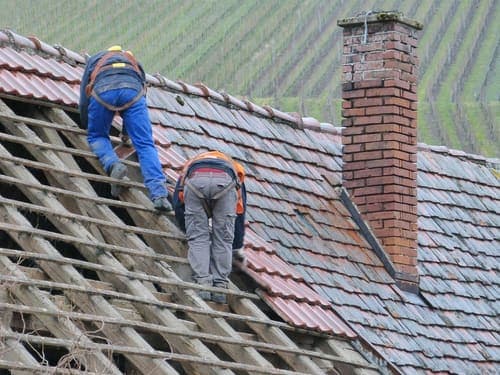
Fireplace chimney removal runs top down, never bottom up. We zip the room off in poly, lay protection along the path out to the truck, and take the demolition of chimney brick above the roofline down by hand, because dropping a stack through its own flue is how you get a hole in a living room floor and clay liner shrapnel in the drapes.
On a gas fireplace removal, the line gets capped by a licensed plumber and proven dead before one brick moves. Then the firebox, the smoke chamber, the ash cleanout down in the basement.
Here's the part that gets skipped: in plenty of Chicago two-flats the floor joists are pocketed straight into the chimney masonry. Yank the brick without heading those off first and the bedroom floor upstairs goes springy on you. We look for that before we swing anything.
Height above the roof, access for hauling, and whether the stack was lined all move the number on a brick fireplace removal.
Partial Chimney Removal
Partial chimney removal is what most people actually want. We take the stack down to just below the roof deck, cap the flue, frame and sheath the opening, and the shingles get tied in so there is no seam left sitting where water runs. Everything below the deck stays where it is, so the brick in the living room never moves.
Going deeper is a different job. If the plan is to demolish a chimney inside the house, down to the attic floor or the basement, something has to carry what the masonry was carrying, so a beam and posts go in before the brick comes out. A gas fireplace removal starts with a licensed plumber capping the line, then the firebox and surround come out.
Where this gets botched is the last course of brick. Leave one row proud of the deck and you have built a shelf that pools water until the sheathing goes soft.
Price swings on how much comes down, roof access, and whether brick chutes out a window or gets hand carried down a staircase.
Brick Chimney Demolition
Brick chimney demolition is hand work, course by course, top down, and there's no clever machine that does it better. We take the stack apart above the roofline with hammers and buckets rather than pushing it over, because an old stack on a Logan Square two-flat can run a couple of tons of common brick, and that much weight landing on a roof deck turns one job into three.
Inside, before a single brick moves, the chase gets poly, tape and a zipper door. Old soot is decades of somebody else's fires and it travels. If there's still a steel or cast iron unit wedged in the firebox, fireplace insert removal happens first, along with the damper and the clay flue tile.
What shifts the number on a chimney removal like this is how far down the stack runs, whether we can back a truck near the rear steps, and whether the brick leaves through your hallway or off staging outside.
Industrial Chimney Demolition
Industrial chimney demolition is the tall stuff: the brick stacks behind old factories and boiler houses, eighty feet and up, plenty of them with a steel liner still hanging inside. We take those down one of two ways. If there's a real drop zone, we fell it.
If there isn't, and on a tight lot in Little Village there usually isn't, we bring it down course by course off a swing stage or with a high reach, wetting the whole time so nobody two doors over is picking soot off a windshield.
What changes the number is height, how close the nearest wall and power drop sit, whether the flue liner comes back positive for asbestos, and wind. A stack doesn't come down on a gusty day off the lake, so a rough March week can add days.
Done wrong, you punch the stack through the boiler house roof it was tied into. Residential chimney removal, fireplace insert removal and wood stove removal are quiet afternoons next to this.
What the job involves
A chimney removal runs top down, never the other way. We tarp the roof and the ground, set our access, then take the stack apart by hand a course or two at a time, dropping brick inside the flue instead of letting it skid across your shingles.
If there's a gas log line or an appliance tied into that flue, it gets shut off and capped before a single brick moves, and a wood stove removal usually means pulling the stove, the pipe and the thimble out of the wall before we touch masonry.
Once the brick is down below the roof, we frame the opening and the roof goes back, sheathed and closed the same day, because a cold snap here doesn't wait for a second visit.
Inside, the hole in the plaster and the framing behind it is the fussy part. Where a fireplace hearth removal is happening on the same visit, we take the hearth up first so the floor is already open when the debris starts coming down.
What it costs
No two chimney removal jobs price out the same, and the biggest lever is how far down we take the stack. Stopping just below the roofline is a short piece of work. Following it down through three floors to the basement footing means opening plaster, framing the floors back, and hauling brick out by the ton.
Access moves it too. If the alley is wide enough to put a container next to the back porch, brick goes straight in. If we're carrying it down an interior stair and out the front, add hours to the labor. A brick chimney demolition where the flue served an old oil heater needs the liner tested before anybody swings anything, and a wood burning stove removal service with a metal flue is lighter, quicker work.
Container permits for the public way, roof patching, and ice on a steep slope all add.
Call us with the address and how many floors the stack runs through and we'll price yours. Brick is heavier than people expect, and weight is most of what the haul-off costs.
When chimney removal is the wrong fix
Plenty of the calls we get about chimney removal turn into something smaller once we get a look at the stack. If the brick above the roofline is sound and the trouble is a cracked crown or a failed clay liner, taking the whole thing down is a swatter for a fly. That is a mason's afternoon, and you keep your fireplace.
If the building itself is coming down this year, do not buy the stack twice. The flue comes out as part of the residential demolition and leaves on the same trucks, and the same goes for a storefront or a warehouse handled under commercial demolition.
Gutting a kitchen around an old chase? That masonry usually comes out with the interior demolition, not as its own scope with its own mobilization.
And if the masonry stays and you just want the appliance and pipe gone, that is a wood burning stove removal service, thimble capped and done. A mill stack is industrial chimney demolition, engineered drop plan and all.
Why choose us for this
Chimney removal is one of those jobs you want to hire out once and never think about again, and most people who call us have already had a mason say the stack is past repointing. You do not want to manage a crew. You want the brick down, the roof closed, and the yard back.
What goes wrong is rarely the demolition. It is the number on the phone growing once someone actually sees the flashing, or a crew pulling the stack and leaving your sheathing open under a tarp while they start the next job. We will not open a roof we cannot close. The hole gets framed, sheathed and closed the same day, and the brick and mortar leave with us.
Height, roof pitch, and whether the truck can sit near the house move the chimney removal cost well before the brick does. Our estimate on fireplace chimney removal costs nothing, and you are not committing to anything by taking one.
Frequently asked questions
How much does chimney removal cost?
There's no flat figure for chimney removal, and anybody quoting one before they've seen your stack is guessing. Height above the roofline, how far the mortar has gone, whether we can back a truck up the side or have to hand brick down through the house, and whether you want the whole stack out or a partial chimney removal stopped at the attic floor all move the number.
Do I need a permit to take a chimney down?
Usually, yes. The city treats it as demolition, and we file for it and handle the inspection side before anyone touches a brick. Skipping that step is how people end up with a stop-work notice and an open roof in February weather.
Will my roof leak once the stack is gone?
It shouldn't. We frame and deck the opening, tie in new underlayment and shingles at the old flashing line, and the roof goes back, sheathed and closed the same day.
Contact Chicago Demolition now
Contact us now if the chimney removal you keep putting off has started dropping mortar grit into the gutter and pebbles onto the back steps. When we come out, we get on the roof, see what the stack is tied into, and check whether a neighbor's flue shares it, which happens more than people expect on an old two flat.
Removing chimney from house on a narrow side lot changes the plan entirely: no room for a lift means we take it down by hand from the top, brick by brick, into a chute.
Some chimney demolition contractors will plan the whole thing off a photo you text over. We want eyes on the roofline, the attic pass through and the footing in the basement first, because access, height and whether the stack runs through finished rooms drive the work far more than the brick count does.
Weekdays, nine to five. Leave a message and it gets returned.