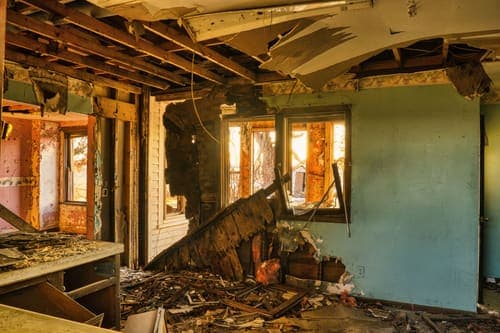
Rust streaks down the skirting, a floor that gives underfoot, nobody living in it since spring.
Nobody buys a lot hoping to inherit somebody else's single-wide. We do mobile home demolition all over Chicago and out into the near suburbs, and the calls tend to sound alike: the land is yours, the trailer came with it, and now it sits there like a houseguest who can't read the room.
Access moves the price harder than square footage does. A double-wide wedged behind a garage with one narrow gate is a different job than one open to the street, and so is asbestos in old floor tile, piers or a slab underneath, and whether the steel frame and axles leave with everything else. What I refuse to do is haul off the box and leave you the tie-downs, the steps and a live utility stub to trip over.
Keep reading for how we take one apart, when tearing it down is the wrong move, and where we work. Ring the office during the week and we will come walk the lot with you.
Trailer Home Removal
Trailer home removal starts underneath the unit, not on top of it: the tie-down anchors, the pier blocks, and whatever got stacked under that frame the year it was set. We strip the skirting, get water and sewer capped and the gas shut at the meter, then take the box apart and pull the steel chassis, axles and hitch out separately so they go to a scrap yard instead of the landfill.
A trailer with soft floors and a sagging ridge can't be towed anywhere, so it comes apart where it sits.
Older units get tested before anything is torn, because floor tile and duct wrap can carry asbestos, and that reorders the whole mobile home demolition. Access drives the cost to remove manufactured home units too: backing a truck to the frame is one day, hand-carrying every piece past a fence line is another.
Manufactured Home Removal
Manufactured home removal is its own animal compared to knocking down a frame house, and the reason is the steel underneath. Below the skirting sits a chassis with axles, a tongue, and tie-down anchors augered into the dirt. Plenty of outfits pull the box off, load the lumber and leave that frame sitting on the pad like a bad tenant.
We take all of it: skirting, piers, the concrete runners, the anchors out of the ground, the steel off to the scrap yard.
Every mobile home demolition starts with gas capped and power killed at the meter. On older units, sheet flooring and the tape on the furnace ducts can carry asbestos, so that gets tested and abated, not shoveled into the dumpster with everything else.
The cost to remove a manufactured home tracks with size, single versus double wide, how close the truck can park, and whether the utilities are still live.
Trailer House Demolition
Trailer house demolition is mostly a steel job, and that catches people off guard. Under the floor sits a chassis, sometimes axles, and tie-down anchors driven into the ground, and every bit of it has to come up before the site is finished. We cut the unit down, pull the frame out for scrap, and dig the block piers and skirting out of the dirt instead of kicking them into the void.
Bury a pier line and whoever pours concrete there later finds it with a bucket.
Anything built before the eighties gets tested first. Old sheet flooring, tile adhesive and some exterior board can carry asbestos, and that reorders the whole sequence of a mobile home tear down.
Width counts too. A double-wide manufactured home removal is two lifts and two loads, and how close the truck can get does more to the price than floor area ever will.
Mobile Home Demolition And Removal
Mobile home demolition and removal isn't really house work. You're taking apart a box bolted to a steel frame, so the job starts underneath: tie-downs cut, skirting pulled, piers broken out, then the frame and axles separated off for scrap. Older units hide asbestos in the floor tile and sometimes the siding, and that gets tested and dealt with before anybody puts a machine on it. Gas and electric get killed at the source, not at the panel inside.
Most of our mobile home removal services run on private land and leased pads, single-wide and double-wide both.
The mess on these is insulation. Loose fiberglass in a stiff wind off the lake ends up three yards down the road, so the pile stays tarped and tight to the pad. Price rides on size, then access, then whether that frame can roll out or has to be cut where it sits.
Junk Mobile Home Removal
Junk mobile home removal is what I get called for when the unit is too far gone to sell, tow, or rent to anybody. It's still mobile home demolition, there's just somebody's whole life sitting in the way of it. Most of these still have furniture inside, a fridge nobody opened since the power got cut, mattresses, cabinets full of paperwork, and a dozen tires holding the roof down.
Our mobile home removal services start with the inside, not the walls. Then we sort: aluminum skirting, siding and the steel chassis go to scrap, while drywall, insulation and soaked carpet ride the container. Skip that sorting and you're paying landfill weight on metal that should have come back the other direction.
Price swings on how much is left inside, how close a truck can get, and whether the frame can be cut down where it sits.
Mobile Home Tear Down
A mobile home tear down isn't one machine and a roll-off box. We kill the power at the pole, cap the water, clear the propane tank, then pull the skirting and cut the tie-down straps off the ground anchors before a bucket touches anything.
The box comes down into the yard, the steel chassis and axles get pulled out for scrap, and the pier blocks and concrete runners come out of the ground too, so nobody is setting a new build on somebody's old footings.
Size is the first thing that moves the cost to demolish and remove a mobile home, then how close we can back the truck, then whether a porch, carport or room addition got framed onto the side. Old units with sheet siding and blown fiberglass come apart fast in a Chicago wind, so we net and load as we go instead of chasing insulation down the block.
What the job involves
Mobile home demolition starts before a machine touches anything: gas capped, water and electric killed at the source, permit in hand. Then the skirting comes off, the tie-downs and anchors come out of the ground, and we open the unit up and work it apart with an excavator. The steel frame gets pulled out and goes for scrap, the rest gets loaded and hauled.
Units built before the early eighties often have floor tile, mastic or siding worth testing first. We test instead of guessing.
The cost to demolish and remove a mobile home swings on size, on how close a truck can park to the unit, and on whether the roof has caved and drunk up a season of rain, because soaked debris weighs about double.
Done cheap, the piers and blocks stay buried and whatever you build next settles right over them.
What it costs
What a mobile home demolition costs comes down to a few things I can size up in ten minutes standing next to the unit. Start with the structure itself: a single-wide with nothing built onto it is simple, while a double-wide wearing a porch, a deck and a shed out back is more tear-out and more hauling. Then access. If the machine and the roll-off can sit right beside the home, the day goes quick.
If every load has to be walked out past a fence line, hours stack up. Age counts too, because older units can carry asbestos in the flooring and siding, and that gets tested and handled properly instead of bulldozed.
Give us the address and we will price yours. One thing I never shortcut is pulling the steel frame and axles out with everything else, because buried chassis is the next owner's headache.
When mobile home demolition is the wrong fix
Sometimes mobile home demolition is the wrong fix, and I would rather say so now than after the machine is already sitting on your lot. If the frame and axles are straight and the roof has no sag in it, that unit can be hauled off whole and sold, and tearing it down to scrap throws away money you could have kept.
If the shell is sound but the subfloor, cabinets and paneling are done for, what you want is interior demolition, stripping it back to studs for a fraction of the trouble.
And if it turns out you have a stick built house on a block foundation, none of the trailer demolition rules apply. That is residential demolition, different machine, different paperwork. A brick stack coming off the roofline is chimney removal. A sunken pool out back is pool removal. An old storefront on the parcel is commercial demolition.
Why choose us for this
You have got a trailer sitting on a lot you want back, and you want one phone call about mobile home demolition, not six of them and a weekend of supervising.
The number I give you on the walk is the number on the invoice. What moves it is what sits under the unit and how close the truck can park: a skirted single-wide on an open lot with the axles still under it is nothing like one wedged between a garage and a fence, sitting on a poured pad with tie-downs and a forgotten fuel tank underneath.
The frame and the tongue leave on the truck with everything else. I do not leave steel behind because scrap went soft that week.
Over 34 years of this and I still walk the lot rather than price a trailer house demolition off a photo. The estimate costs nothing, and nothing is owed after it.
Frequently asked questions
Does a mobile home teardown need a permit?
Yes. Mobile home demolition inside the city goes through a wrecking permit, and the gas, water and electric all have to be cut and capped by the utilities before anything moves. Those disconnects are usually what set your start date, not our schedule.
How long are you on the lot?
Most single-wides are done in half a day. A double-wide with a deck, skirting and a slab underneath takes longer, and tight alley access means smaller loads and more trips back out to the street.
Does the stuff left inside go too?
It does. Junk mobile home removal covers the furniture, the dead fridge, the cabinets and the carpet, all of it cleared before the walls come down. Steel frame and aluminum siding get pulled for scrap, and the rest rides out to the transfer station.
Contact Chicago Demolition now
Call now and we can get your Chicago mobile home demolition on the schedule. What helps most before we come out is the size of the unit, whether the steel frame and axles are still underneath it, and how close a truck can back up to it. Those three set the number before anybody touches a wrench.
If you bought a lot and want to remove a mobile home from property you now own, tell us what is still hooked up. Gas capped, water killed at the curb stop, electric pulled at the meter: that sequence comes first, and the utility side stretches the calendar more than the tear out ever does.
Somebody is here weekdays through the afternoon, and a message gets a call back. Send photos of the skirting and the underbelly if you can. Loose fiberglass batts are the mess neighbors notice on these, so we tarp and fence for it.