That old walk is in pieces, and the pieces move when you step on them.
Concrete is the only material on your property that never warns you it is done. It just splits one winter and keeps splitting.
Concrete removal is a big share of what we do around Chicago, from garage slabs in Avondale to back patios in Beverly to sidewalk aprons all over the North Side. Break it, load it, get it gone, and leave you ground worth pouring on. That last part is where a lot of concrete demolition goes wrong.
A crew hammers the slab, hauls the big chunks off and leaves inches of rubble and grit sitting there, so your new pour rests on junk and cracks by its second summer. We dig that out.
What a concrete driveway demolition cost turns on is thickness, whether there is rebar or mesh buried in it, and how close the truck can get. Keep reading for how the work actually runs, where we go and what people ask first. Call and I will come look at it.
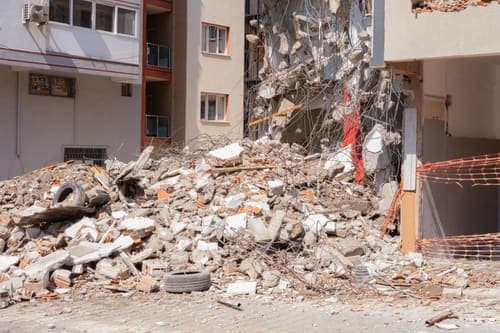
Concrete Hauling
Concrete hauling is the half of this work nobody pictures, and it's where all the weight hides. A four inch slab runs around fifty pounds per square foot, so a two car pad can put better than ten tons on the ground once it's broken up. We haul in dump trailers and make trips rather than stuffing one container past what the axles are allowed to carry.
Clean broken concrete goes to a recycling yard and comes back out as crushed aggregate. Clean is the operative word. Throw in fence boards, old shingles or a few buckets of dirt and the load stops being clean fill, which means a different gate, a different fee, and sometimes a load sent back. So we pull wire mesh and cut rebar out on site.
Tonnage, thickness and the length of the walk are what change a hauling figure. Trailer on the pad, loading is quick. Every chunk wheelbarrowed down a gangway, that's a day.
Hauling is built into every concrete removal and concrete demolition Chicago Demolition takes on.
Concrete Debris Removal
Concrete debris removal is the half of a concrete demo nobody pictures when they call. Breaking the slab is the loud, fast part. Moving it is what eats the day. A four inch patio pad comes up in chunks two guys can carry.
A six inch garage floor with wire mesh rolled through it comes up in mats that fight back, and that mesh gets cut free before anything is loaded, or you are wrestling a bedspring the size of a car hood.
So we break to a size that suits your access. If the truck has to sit out front and every piece crosses forty feet of lawn, we go smaller and run a buggy over plywood so you are not left with ruts to reseed. If the alley is wide enough for the truck, pieces stay big and the job moves.
Clean concrete, no dirt, no asphalt, no bagged trash on the pile, goes to a recycler and gets crushed. Mixed debris costs far more to get rid of, whatever it weighs.
Driveway Removal
Driveway removal starts at the sidewalk, not at the garage. We saw a clean line at the public walk and at the alley apron so the city's concrete stays put, then break the slab in sections and pull the wire mesh out with it instead of burying it in the hole.
What swings the price on a drive is thickness, reinforcement and access. Four inches poured for a sedan comes up easy. Eight inches with rebar, or a second slab hiding under the one you can see, is a different day's work. A narrow side yard with a gate means hand breaking and wheelbarrows, and frozen ground in January digs slower than it does in fall. That's most of concrete slab removal cost right there.
Where I see driveway and patio removal go wrong is the hole. Crews skim the top, leave broken chunks and soft fill, and the new pour settles within a season or two, usually toward the house. We dig it out clean and leave the grade below the garage slab.
Concrete Slab Demolition
Concrete slab demolition is the bulk of our concrete removal work: garage pads, back patios, basement floors, and the mystery slab somebody poured over a sandbox decades ago. We saw cut along every edge that stays first, so the break line is clean and the public walk or the foundation next to it doesn't come up with the rest. Then we find out what's inside.
Older pads hide wire mesh, newer pours have rebar, and either one changes how fast the breaker gets through. What sits underneath matters more, because a gas line or a clay sewer lateral a few inches below a patio is not something you want to meet with a jackhammer.
Thickness, reinforcement and access swing the concrete slab removal cost around, and a back yard you can only reach through a narrow gangway means hand tools and buggies instead of a machine.
Done sloppy, a patio removal leaves rebar stubs standing in the dirt, a chewed edge where the stoop meets it, and a hole backfilled with broken chunks that sinks by fall.
What the job involves
Concrete removal starts with finding out what we're actually cutting into. Four inches of plain slab breaks up quick. Six or eight inches with wire mesh or rebar in it gets scored with a saw first, into pieces small enough to move without chewing up the ground underneath. And before the breaker swings, we find what's buried: gas service, sprinkler lines, the old clay downspout tile somebody ran under the patio decades ago.
A wall is different work, because something is leaning on it. Retaining wall demolition comes off the top down, course by course, since the dirt behind it is the only reason the wall was ever built. Take it out in one bite and your neighbor's yard ends up in your lap. We look for deadmen and tie-backs and plan where that soil goes first.
Thickness, steel inside, depth, and whether pieces get hand-carried up a narrow gangway or dropped in a truck at the alley all move the price. Skip the void backfill and the new pour settles.
What it costs
What concrete removal costs on your property comes down first to how thick the pour is and what's buried inside it. A four inch back walk breaks up fast. A garage slab at six or eight inches with rebar running through it is a full day's work, and old sidewalk with wire mesh tangled in it has to be cut and rolled out in sections. Access counts just as much.
If the truck can sit in the alley next to the slab, good. If we're wheeling broken concrete down a narrow gangway past your neighbor's tomatoes, that's hours of labor nobody sees on paper. Retaining wall demolition brings in the footing and whatever the wall was holding back, which has to be handled before the dig starts. Frozen ground in January slows the breaking and makes every load heavier.
Call us with rough dimensions and a word about what's around it and we'll price it properly.
Buried rubble left as fill settles. So it goes out.
When concrete removal is the wrong fix
Not every slab needs concrete removal, and a sunken one usually doesn't. If the panels are still sound and one corner has dropped, lifting it puts the surface back where it belongs for a fraction of what breaking, loading and concrete hauling would run you on concrete that never actually failed. Asking me for a concrete demolition cost per square foot on that slab is paying for the wrong answer.
Same story with a leaning garage. The floor under it is often the healthiest thing on the lot, so garage demolition comes first and we decide about the slab once the walls are down and I can see the edges.
If the pad you keep staring at is holding up a rotting deck, deck removal is the job in front of you, and the pad may be perfectly good for whatever goes back. Post footings along a property line come out with the fence removal, not as their own project. Tile or vinyl glued to a basement slab is floor removal. A dead chest freezer down there is appliance removal.
Why choose us for this
You have a slab out back that has cracked, heaved and started growing weeds through the joints, and what you want from concrete removal is to hire it once and then not think about that corner of the property for years. Not to babysit anybody. Not to chase somebody about the pile.
The pile is where a lot of low quotes come apart. Breaking a slab is the easy half. Concrete debris removal gets priced on weight, and a driveway with wire mesh or rebar through it weighs far more than people guess, so when hauling and dumping aren't inside the number you heard on the phone, they show up on the invoice instead.
Over 34 years of pulling concrete out of city lots has taught me what actually moves a concrete removal job: thickness, what sits underneath, and whether a truck can back up to it or every chunk rides a wheelbarrow down the gangway.
I don't put a breaker to a slab before locating the gas line, the sewer lateral and the old footing under it.
An estimate costs nothing, and you can sit on it.
Frequently asked questions
Will concrete removal next to my foundation crack the wall?
Not the way we sequence it. We saw cut a relief line, break the open field with the machine, then finish the last two feet by the footing with a hand breaker so the shock travels down through the slab instead of sideways into your wall. Brick sidewalls in a tight gangway get plywood over them before anything swings.
Is a permit needed to take out a patio or garage slab?
Usually not for a patio or a garage floor sitting behind the building line. Once the work touches the public way, an apron or a public walk, it does, and that gets pulled before the saw runs. Skipping it is how a job stops dead with a notice taped to the fence.
What's the difference between resurfacing and tearing the slab out?
Resurfacing bonds a thin wear layer over concrete that's still solid underneath, and it handles salt scaling fine. Once a four inch slab has heaved and cracked clean through, an overlay just copies the crack back to the surface inside one winter. That's when concrete slab demolition is the honest repair.
Contact Chicago Demolition now
Contact us now and tell me what is coming out: a patio, a garage apron, a front walk that has tipped back toward the house. Most concrete removal comes down to three things I need to know before a crew ever pulls up. How thick the pour is, whether there is wire mesh or rebar buried in it, and whether a machine can get down the gangway or in off the alley to reach it.
Hand work behind a narrow gate with a locked fence takes longer than a skid steer with a hammer on the end of it, every single time.
Plenty of people open by asking about concrete driveway demolition cost and finish by describing the crack that started the whole thing. That is useful. The condition it has got into tells me as much as the square footage does.
Weekdays, nine to five, somebody is here, and a message left outside those hours gets returned. Photos help. Send them and we save a trip.