Studs showing in one room, a wall you want gone in the next, and nowhere to put the debris.
Interior demolition is the polite half of this trade: the building stays standing and everything inside it leaves. We gut condos, offices, restaurants and three flats all over the city, and we do it without shaking the neighbor's plaster off the ceiling. A lot of our calls come from owners who learned the hard way that not every crew selling interior demolition checks what a wall is carrying before they open it.
Nobody on my crew swings at anything until we have traced the load path, capped what needs capping, and had older buildings tested for asbestos. Commercial interior demolition often means evening hours, plastic up, and a freight elevator window we stick to.
What follows is how the work actually goes, what moves the number, where we work and what people ask first. Call and we will come walk the space with you.
Demolition In Building
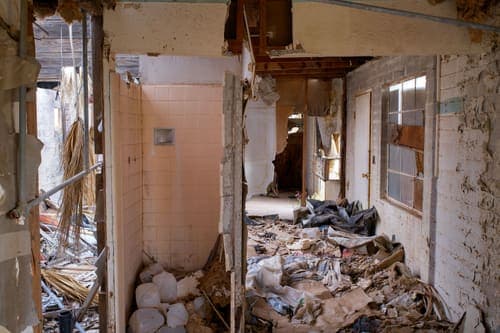
Demolition in building work means everything leaves through a door, not off the side with an excavator, and that changes the whole job. Inside a structure that's staying up, we mask the corridors, protect the elevator cab and the finished floors we're keeping, and run poly containment with negative air so the dust stays in the room it started in.
Our demolition company spends most of its week on commercial interior demolition, older office floors and storefronts where the freight elevator is small and the alley has exactly one dumpster slot. Access does more to a bid than square footage does: stair carries, dock windows, tenants working the floor below. Sloppy interior demolition contractors put a saw through a bearing wall or a live conduit, and then everybody's waiting on a structural engineer. We open walls and look first.
Bathroom Demolition
Bathroom demolition is the smallest room in the house and usually the heaviest pile on the truck. Old bathrooms here sit on a mortar bed poured over wire lath, better than an inch of it under the hex tile, and that comes out in buckets rather than sheets.
We shut the water at the stops, pull the toilet and vanity, cap the supplies so nothing weeps behind a finished wall later, and cut a cast iron tub in place when the stairwell will not take it whole.
People ask about interior demolition cost per square foot, and a bathroom is where that figure stops meaning much. A five by seven room can outweigh a bedroom three times its size.
Access, how far back the plumbing gets stripped, and old floor tile that needs testing first are what push a bathroom up.
Kitchen Demolition
Kitchen demolition is the one room where the wrecking part is the easy part. Cabinets come off the wall in pieces, the countertop gets cut and carried, and the real work is everything hiding behind it: the gas line to the range capped properly, the water shut and the stubs closed, the vent stack in the wall that gets found before a sledge finds it.
Under the vinyl there's usually another vinyl, then linoleum, then subfloor, and in an older two-flat that subfloor is doing more than you'd like.
A kitchen also skews any interior demolition cost per square foot math, because it's a small room stuffed with fixtures, and access through a rear porch changes the day considerably.
Most kitchens we open get paired with bathroom demolition, same dust barrier, same dumpster, one mess instead of two.
Shower Demolition
Shower demolition is the fussiest small piece of any interior demolition scope, because half of what you're breaking is holding water in a place nobody has looked at since the tile went in. Older Chicago showers are usually a mud bed over wire lath, a good inch and a half of packed sand and cement that shrugs off a hammer and then lets go in slabs.
We cut the field out in sections, pull the pan liner, cap the drain, and look at the joists and subfloor while they're open, because a weeping drain collar has often been feeding rot for years.
What moves the cost is the stall size, mud bed versus backer board, whether the mastic needs testing first, and how the debris gets down a back stair.
Done wrong, chunks go down the open drain and the plumber inherits your problem. Paired with a kitchen demolition, we schedule both so the building only eats dust once.
Basement Demolition
Basement demolition is the job where the stairs run everything. Nothing rolls out of a basement. Every sheet of paneling, every drop ceiling tile, every water-stained wall gets carried up a narrow flight or passed out a window well, so a tight turn at the landing does more to your bill than the footprint does. Of all the interior demolition we handle, below grade is the slowest hauling, and that time is what you're paying for.
We seal the top of the stairs and run dust control so the rest of the house isn't breathing forty years of plaster.
And nobody swings at a stud wall down there until we know what's sitting on it. In older two-flats those partitions often got framed tight under a beam. Wrapped pipe insulation gets tested, not torn.
Ceiling Demolition
Ceiling demolition is the filthiest hour of any interior demolition job, because plaster dust travels wherever the air does and turns up inside kitchen cabinets two floors down. So we seal the openings with poly, run negative air, and take the ceiling out before anything else in the room gets touched. Old lath and plaster comes down in heavy, nail-studded slabs, and in a back-stair three-flat every bucket of it gets carried by hand.
What I watch for overhead: sprinkler heads, live junction boxes nobody bothered to label, and a sheet of drywall some previous owner screwed straight over the original plaster. Basement demolition almost always begins with the tile grid coming out first.
Layers, ceiling height, and how far debris has to travel to the truck matter more than square footage, and the same holds for the cost to demo interior wall work.
Selective Interior Demolition
Selective interior demolition is the surgical version of this work: you tell me what stays, and everything around it comes out clean. On a Wicker Park three-flat that might mean the kitchen partition and the drywall removal over it, while the plaster ceiling, the oak floors and the unit next door go untouched.
We cut the wall free at the top plate and the adjoining surfaces before anything swings, kill and cap the circuits, and open the cavity to look first, because old flats hide a cast iron stack or a BX run in the exact stud bay you would rather not find with a sledge.
The cost to demo interior wall sections rides on how much has to survive: floor protection, dust walls, shoring a bearing partition, and carrying debris down three flights by hand instead of out a chute.
Interior Wall Demolition
Interior wall demolition starts with working out whether the wall is holding anything up, because a partition and a bearing wall come apart in completely different ways. I open the ceiling first and look at which direction the joists run. If they land on that wall, temporary shoring goes in before a single stud moves.
Power killed at the panel, water shut and capped, poly and a zipper door so the dust stays in that room and not on the couch two rooms over.
Most of this is demolition in building interiors people are still living in, so containment matters as much as the swinging.
Older places here are plaster and lath, which makes drywall removal look polite by comparison. Price rides on bearing or not, plaster or board, what's hiding in the cavity, and how far debris gets carried to the truck.
Total Interior Demolition
Total interior demolition means the unit comes back to bare studs, joists and subfloor: walls, ceilings, cabinets, tile, tubs, flooring, all of it. We cap the utilities first, protect the stair treads and the shared hallway, then work top down so nothing drops on what's still standing. Plaster and lath in an older three-flat throws off far more debris weight than drywall, and with no alley for the container, it all comes down the stairs in buckets.
Square footage, the floor you're on, and whether the old tile is bedded in mastic do more to the price than anything else on the sheet.
Done badly, somebody swings at a wall holding roof load, or cuts a vent stack serving two units above. We work out what's bearing and what's live before the first hammer. Plenty of people call us as bathroom demolition contractors and end up gutting the whole floor.
Attic Demolition
Attic demolition is a hauling problem more than a swinging problem. Up there you've got blown-in cellulose or old vermiculite, rock lath kneewalls, knob-and-tube wiring nobody has touched in fifty years, and one narrow stair to bring every bit of it down. Anything that looks like vermiculite gets tested before we disturb it, because that's the material that can carry asbestos, and once it's airborne it's in the whole house.
Insulation gets bagged in the attic and carried down a covered path, never raked onto the floor below. Kneewalls and collar ties sometimes carry roof load, so we read the framing before anything comes out.
A Chicago attic in August sits well past a hundred degrees, so the crew starts at seven and works the heat. Most attics are a day, two if somebody finished it off as a bedroom. Insulation volume, stair width and plaster versus drywall are what change the price.
What the job involves
Interior demolition is a gut job inside a building that still has to be standing when we leave, so a good share of the day goes into protection before a single wall opens up: hardboard over the floors you're keeping, poly and tape at the doorways, the stair rail wrapped, and water, gas and power shut off to whatever we're taking apart.
We work top down. Fixtures and cabinets out, plaster and lath off the studs, nails pulled flush, then debris down the back stairs or a chute into the dumpster.
Done sloppy, a reciprocating saw finds a live line or a cast iron stack, or a bearing wall goes and the ceiling above it starts talking to you. A shower demolition with an unprotected drain leaves the next trade digging thinset out of the pan.
Access drives the work more than square footage does: three flights with no elevator, plaster instead of drywall, an attic demolition where every bucket comes down a scuttle hole.
What it costs
What it costs has less to do with square footage than with how the debris gets out of the building. A storefront on the ground floor where we can pull a truck up close is one thing. A third-floor walkup with a narrow stair and a shared alley means every bucket of plaster comes down by hand, and that's labor.
Age matters too. Lath and plaster weighs far more than drywall, and ceiling demolition in a pre-war place usually means testing first. Carpet removal sounds like the easy part until you find it glued flat to a slab instead of stretched over tack strip.
Dumpster placement, permits, whether the units above stay occupied: all of it moves the number.
Call us with the address and the rooms you want gone and we'll price your interior demolition properly. Nobody can do that off square footage alone.
When interior demolition is the wrong fix
Interior demolition is the wrong fix when the problem was never inside the walls. A cracked pool full of black leaves in the back yard is pool removal, machine and truck work, not a crew with sledges in your hallway. Same story with the hot tub nobody has fired up since the last time the Bears looked good: hot tub removal is an afternoon, and it has nothing to do with your kitchen. A heaved patio slab is concrete removal.
Rotten joists hanging off the back of a two flat mean deck removal. A fence that has given up along the alley wants fence removal.
And if the whole building is coming down next month, paying for selective interior demolition first is money in the dumpster. Carpet removal on its own, fine. Gutting a house you're razing anyway, no.
Why choose us for this
You've got a wall you want gone, and you'd rather not be the one standing there guessing which studs are holding the ceiling up. Interior demolition goes sideways when the number on the phone covers the knocking down and nothing else: the dumpster swaps, hauling priced by weight, the plaster dust that finds every room on the floor, the live circuits and the capped-off gas stub buried in that wall.
A cheap bid usually means those lines are missing, and they come back as either your Saturday or your invoice.
You want to hire this once and stop thinking about it. We've been doing gut work and interior wall demolition here the best part of 34 years, so the load-bearing question gets settled first. A third-floor walk-up with one tight staircase takes more labor than a ground unit, since every bucket goes down by hand. Having us come look costs you nothing and books nothing.
Frequently asked questions
What are the three types of demolition?
Interior, selective and total. Interior demolition takes a space back to studs, joists and slab while the shell, roof and exterior walls stay exactly where they are. Selective work removes specific pieces and leaves the rest untouched, and total means the whole structure comes down.
Will pulling out a wall crack the rest of my house?
Not if the load path gets checked before a single stud is cut. On residential interior demolition we shore up above with temporary posts, protect the floors we're keeping with hardboard, and cut plaster in controlled sections so the keys don't let go on the far side of a partition wall.
Do I need a permit for this in Chicago?
Usually, yes, and always if anything structural moves. Pre-1980 buildings also need the materials checked and the city notified before work starts.
Contact Chicago Demolition now
Contact us now, ideally before the first sledgehammer comes out of the garage. Most residential interior demolition here starts with us walking the rooms with you: which walls are carrying load, whether you've got plaster over lath or drywall, what's running behind the wall where the old cast iron stack sits, and where a dumpster can go if there's an alley instead of just a curb cut.
A third-floor walk-up, or a condo board that wants the elevator padded and booked, changes how we schedule the crew. Tell us the address and what you want gone, and we will get back to you.
Somebody's here nine to five, Monday through Friday, and when a closing date or your carpenter's start date won't wait, we'll come out on a Saturday. Licensed, bonded and insured, with the certificate available on request.